





UCC & Partners in Assin South and Abura Asebu Kwamankese to Advance Action Research, Extension Delivery and Youth Career and Seed System Development in Sweet Potato Value Chain.
The TAGDev 2.0 Programme at the University of Cape Coast (UCC) has strengthened its collaboration with key partners to promote action research, agricultural extension, and youth career development in the sweet potato value chain.
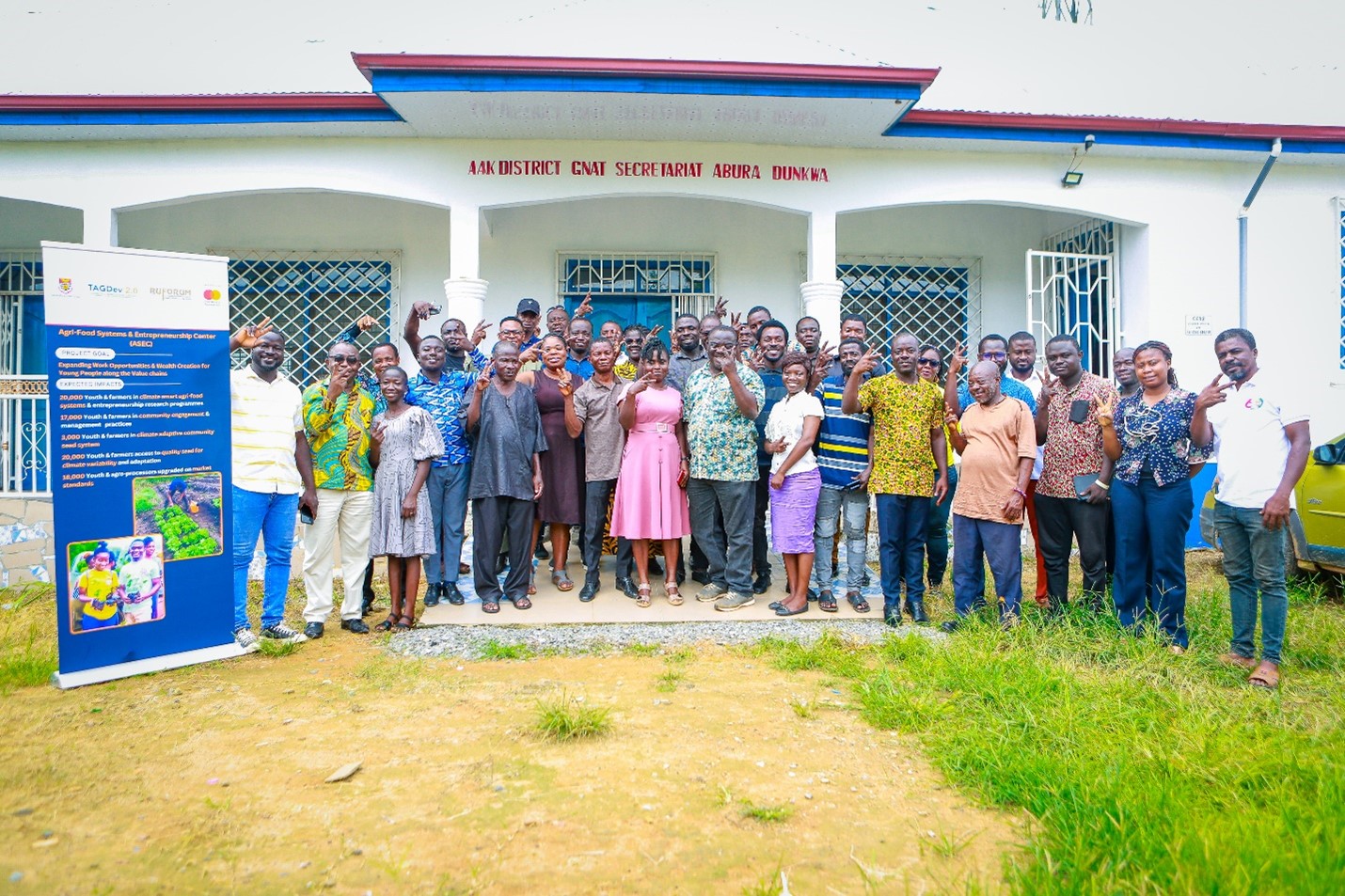
The TAGDev 2.0-UCC team, with the participants from the partner institution and districts
The sweet potato component of the programme is being implemented in the Assin South and Abura Asebu Kwamankese Districts areas where sweet potato production and processing are dominant economic activities. This effort forms part of a broader strategy to build climate-smart, adaptive agri-food systems and enhance entrepreneurship opportunities for the youth.
TAGDev 2.0 aims to redesign and develop climate-resilient agri-food value chains, strengthen district-level agricultural extension structures, and establish sustainable career pathways for young people, particularly those involved in seed systems. As part of this effort, a one-day stakeholders’ workshop was held to sensitize participants on gender and safeguarding, entrepreneurship, youth career development, and extension delivery.
The workshop brought together Directors and staff of the Departments of Agriculture from both districts, alongside officials from UCC and the Asuansi Farm Institute.
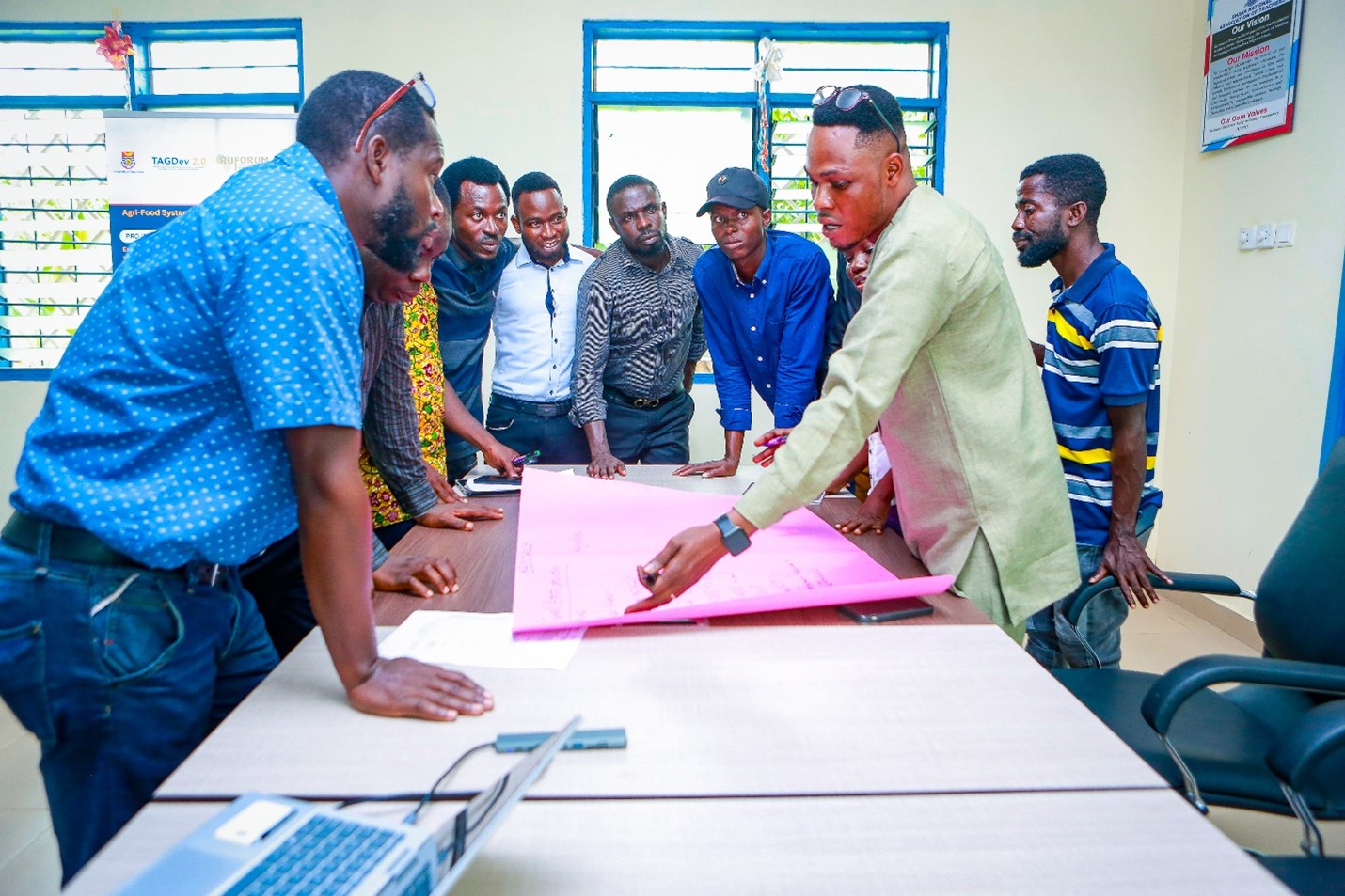
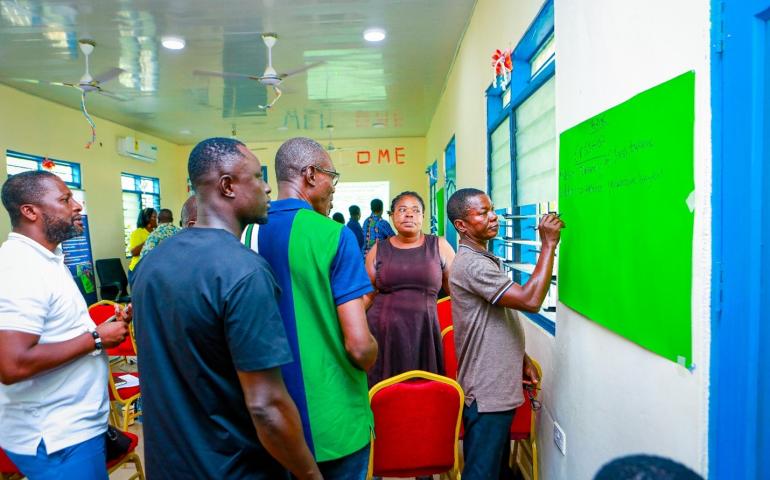
The AAK team is brainstorming during the group session
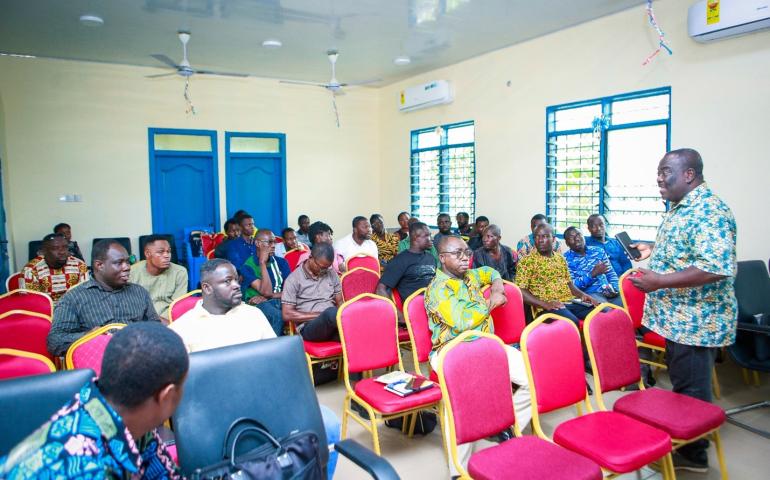
Opening the programme, the UCC TAGDev 2.0 Coordinator, Prof. Festus Annor-Frempong, emphasised that the initiative aims to equip young people, particularly women and marginalized groups, with the skills needed to secure decent livelihoods. He noted that the partnership between UCC, the Asuansi Farm Institute, and the Departments of Agriculture in the two districts is crucial to developing a vibrant sweet potato value chain capable of generating employment and improving household incomes. “The objective of creating jobs can be achieved if partners work together to support the youth and marginalized persons to take advantage of opportunities along the sweet potato value chain,” he stressed.
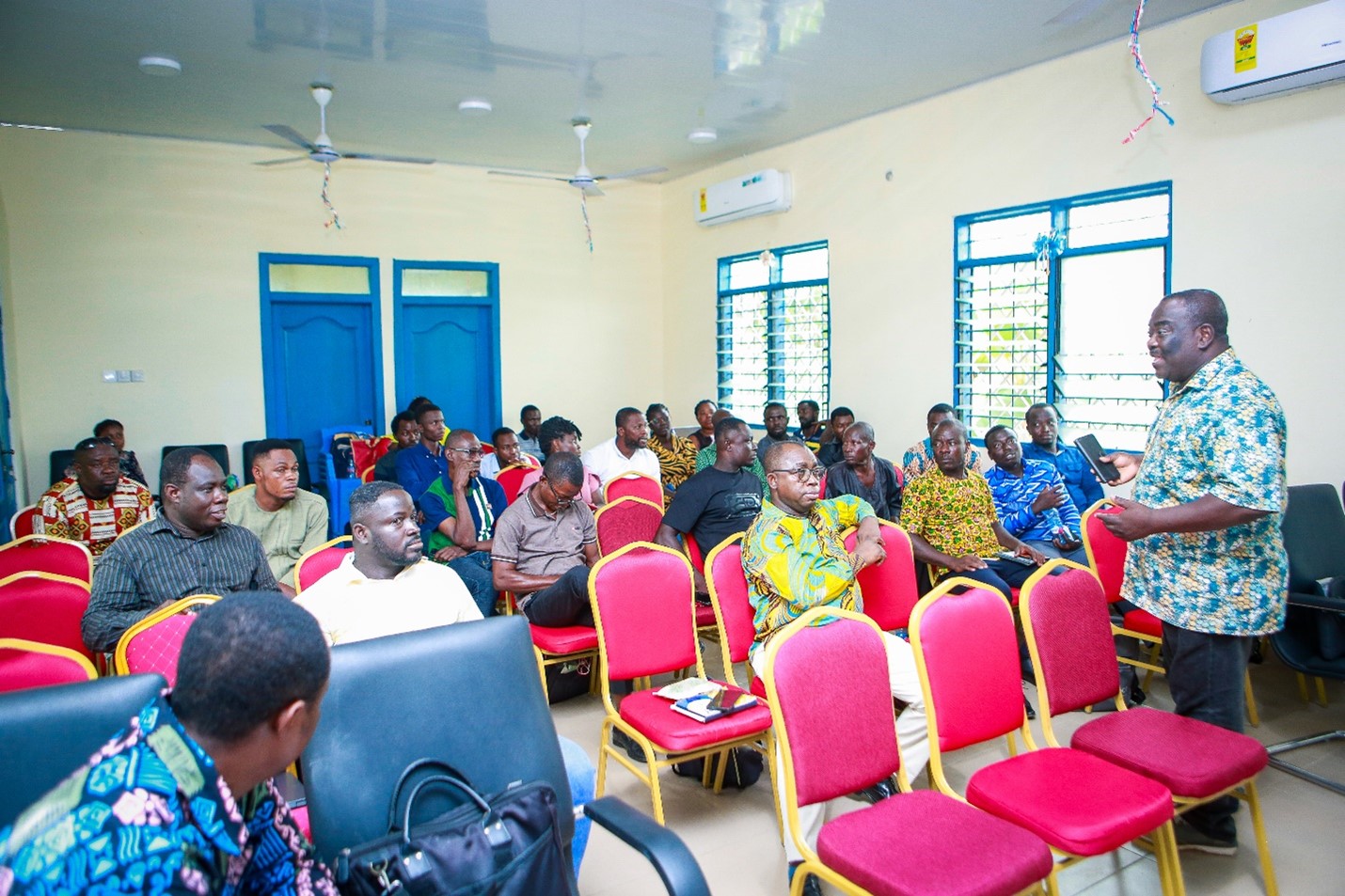
Prof. Festus Annor-Frempong opening the engagement session
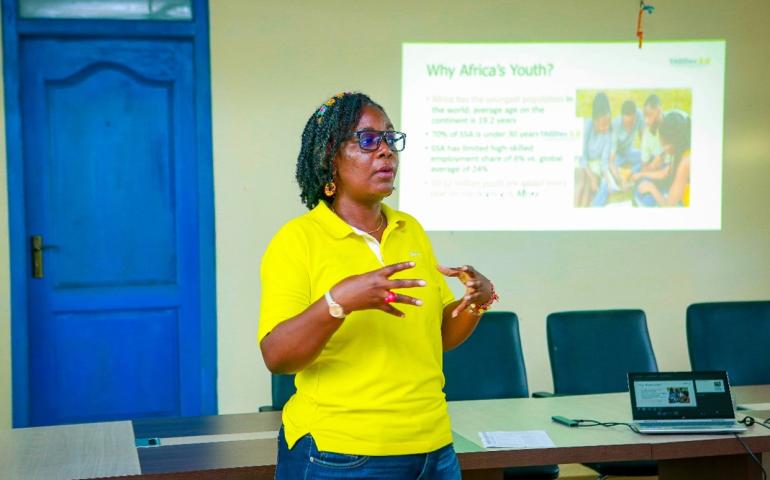
A major highlight of the workshop was the session on entrepreneurship, led by Ms. Naa Kokoi Armah, Business and Entrepreneurship Officer, who facilitated discussions on “Entrepreneurship & University-TVET Linkages for Effective Programme Implementation.” Participants worked in groups to generate innovative business ideas and explore opportunities for wealth creation along agrifood value chains. The districts also outlined their specific challenges and proposed actionable strategies to enhance their value-chain activities.
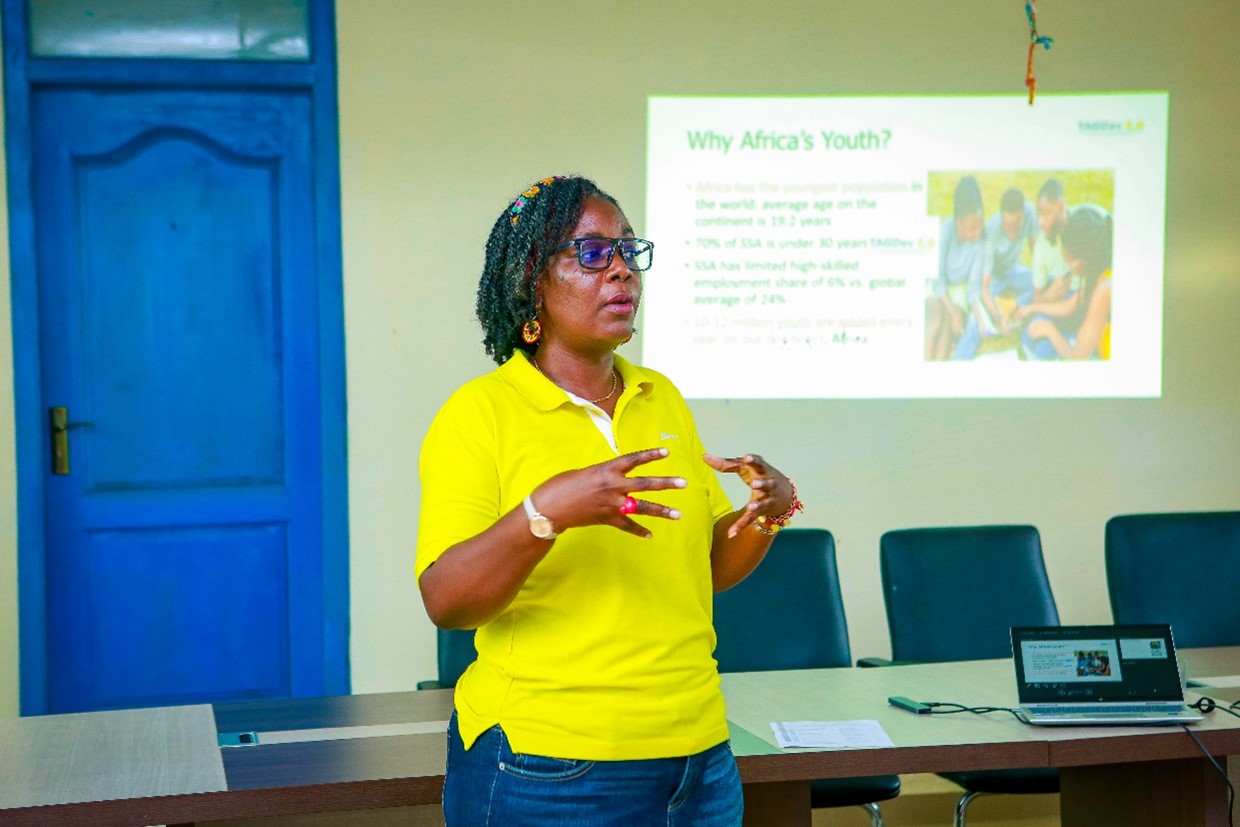
Mrs. Irene Naa Kokoi Armah, The Entrepreneurship and Business making a presentation at the event
On issues of equity and protection, the Gender, Inclusion and Safeguarding Officer of TAGDev 2.0, Dr Lawrence Acheampong, delivered on “Unpacking Gender, Inclusion and Safeguarding Issues in Programme Implementation.” He challenged partners to prioritize inclusivity by ensuring that refugees, displaced persons, persons with disabilities, and vulnerable youth are deliberately targeted.

Group session for Assin South team
“We need to create a safe and enabling environment that supports all participants. As partners, we must empower young women and men in the agriculture value chain to develop their leadership, entrepreneurial, and academic careers,” he said.
The TAGDev 2.0 team, including Headmaster Asuansi Farm Institute, Head of Asuansi Agricultural Farm Station, and Directors of Departments of Agriculture and sweet potato Breeder from CRI(Dr Kwadwo Adofo), developed a comprehensive programme for Collaborative Climate Adaptive Action Research, Extension, and Youth Careers and seed system to develop the sweet potato value chain AAK in Assin South.

Asuansi team working in a group
A Sweetpotato Breeder, and Researcher from the Council for Scientific and Industrial Research (CSIR), Dr. Kwadwo Adofo, urged the partners to adopt innovative approaches in reaching the programme’s target groups. Drawing on his engagements with them in developing the sweet potato crop, he emphasized that they are well-positioned to identify climate-smart strategies to empower the youth to engage in the production, processing, value addition, and marketing of sweet potato in ways that will appeal to the youth and marginalized persons in society.

Dr. Kwadwo Adofo is presenting at the engagement session
Presenting on last-mile extension delivery, Associate Programme Officer, Dr Zikiru Shaibu stressed the importance of ensuring that agricultural knowledge, technologies, and inputs reach farmers, especially those in remote or underserved communities.
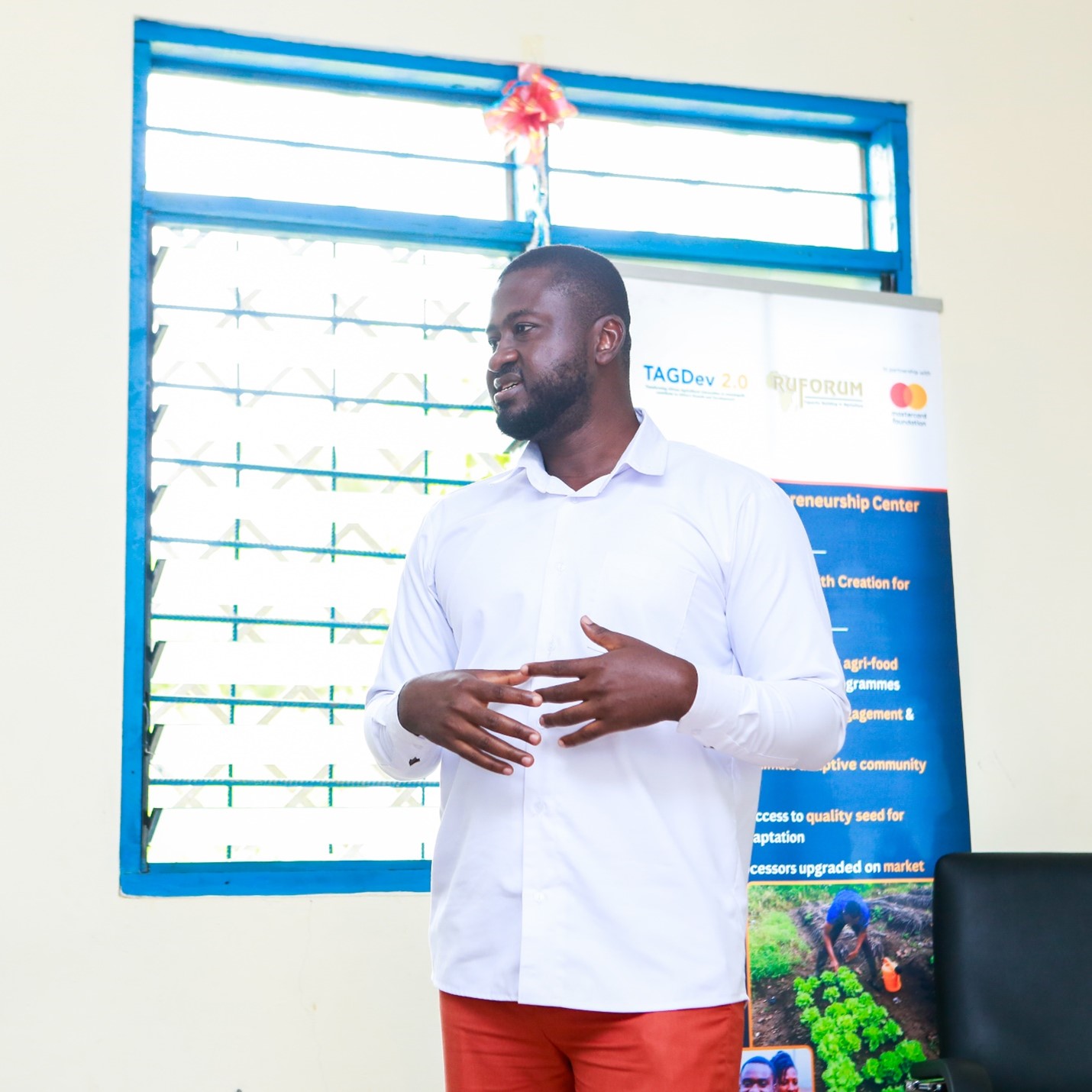
Associate Programme Officer, Dr. Zikiru Shaibu, presenting at the function
He highlighted the need to bridge the gap between technology providers and farmers so that innovations are not only shared but effectively adopted to improve livelihoods. According to him, such efforts should create a ripple effect that leads to increased yields, higher incomes, and stronger rural economies.